Does Starting Solids Affect Your Baby’s Sleep?
Will starting solids help your baby sleep? Will protein before bed wreck it? Australian paediatric dietitians go through what the research actually shows - including the one big trial that did find an effect, and why it still isn't a reason to start early.

Sleep is the question we get asked about most
And it makes sense. Sleep can be hard to come by when you have a baby.
Whether your bub's sleep has been a literal dream and you're nervous about throwing food into the mix, or they've never slept for longer than a 40-minute stretch and you're hunting for anything that might help - we get it. It's natural to want to know how this milestone is going to affect sleep.
Sleep is so heavily scrutinised that it can start to feel like a scorecard for how you're performing as a parent. And the second you type anything about infant sleep into a search bar, you'll get a barrage of targeted ads for sleep consultants and sleep programs. We've been there. Tracking wake windows. Blackout curtains. Your third white noise machine (this one has a red light which apparently produces melatonin).
You'll do just about anything for a bit more rest. Which is precisely why this space is so full of people willing to sell you something.
So let's be straight with you - including about the bits where the answer isn't as tidy as we'd like.
The claims you'll see everywhere
- Don't feed your baby protein before bed - it'll wreck their sleep
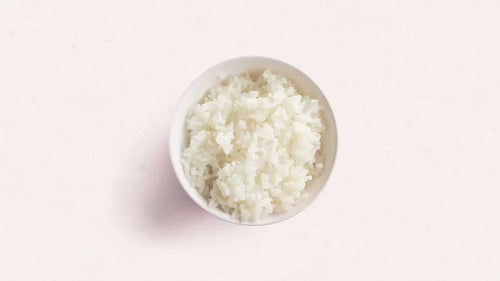
- Add infant rice cereal to the bottle to help them sleep through
- A spoonful of butter before bed for "sustained energy overnight"
- Give formula before bed so they sleep longer
- Load up on tryptophan-rich foods to promote sleep
None of these are supported by good quality evidence. And one of them - the rice cereal in the bottle - has actually been put to the test properly.
The rice cereal myth was tested. It failed.
This one has been doing the rounds for decades, and it's been directly studied.
A randomised controlled trial gave infants either rice cereal or a placebo before bed and tracked their night waking. There was no difference in whether the babies slept through the night.(1) It didn't work.
Worse, thickening a bottle with cereal is not recommended - it's an unnecessary choking and aspiration risk, it adds energy without teaching any feeding skills, and it can displace milk at an age when milk still matters most.(2)
Same for protein at bedtime, butter, and tryptophan hacks. There's no credible research showing any of these change infant sleep. Babies aren't little adults with a blood-sugar curve to manage overnight - they wake because waking is biologically normal at this age.
But does starting solids affect sleep at all?
Here's where we want to be honest with you rather than just tell you what's convenient.
The largest trial to look at this is the EAT study (Enquiring About Tolerance) - a randomised controlled trial of over 1,300 UK infants. Babies were randomised to either start solids from around three months alongside breastfeeding, or to be exclusively breastfed to around six months. A secondary analysis published in JAMA Pediatrics looked specifically at sleep.(3)
And it did find a difference. The early-introduction group:
- Slept slightly longer - about 16 extra minutes a night at the point of greatest difference
- Woke slightly less often - around 9% fewer wakes
- Had fewer parent-reported "serious sleep problems"
These were statistically significant. So no, we can't say "solids have absolutely no effect on sleep" - that isn't what the evidence shows, and we're not going to pretend otherwise.
But read the number again. Sixteen minutes.
Why that still isn't a reason to start solids early
Sixteen minutes is real. It is also, for most exhausted parents, not the thing that's going to change your life - and it comes with trade-offs that matter far more than a quarter of an hour.
Here's the important context the sleep-hack crowd leave out:
- That trial compared 3 months to 6 months. It says nothing about whether feeding your six-month-old a bigger dinner helps them sleep. It's not a licence to "top them up" at night.
- Australian guidelines recommend starting around six months (and not before four), and that timing isn't about sleep at all - it's about your baby's developmental readiness, safe swallowing, and their iron needs.(2)
- Babies need to be developmentally ready. Good head and trunk control, sitting with support, reaching for food. A three-month-old generally isn't there yet, and pushing solids on a baby who can't sit up is a genuine safety issue.
- The effect was small and it faded. It wasn't a solution to night waking. Nobody in that trial started sleeping through because of a bowl of puree.
So: solids can nudge sleep at the margins. They will not fix it. And starting early to chase 16 minutes is a bad trade.
What genuinely can disrupt sleep when solids start
These are the ones actually worth your attention.
Constipation. Solids change poo. Fibre gets introduced, stools become more formed and less runny, and some babies get constipated and uncomfortable - which absolutely can wreck sleep. Managing the constipation is the fix, not cutting out solids. (See our constipation and dairy article.)
Allergies, reflux and intolerances. Babies with a cow's milk protein allergy, for example, often have a long history of being unsettled and sleeping poorly, and they're more prone to constipation as foods are introduced.
And here we need to correct something we've seen repeated everywhere - including by us, previously.
Food allergy in Australia is not rare
You'll often hear allergy waved away as an edge case. It isn't.
The Australian HealthNuts study - which didn't rely on parent report, but food-challenged infants in a clinic - found around 11% of 12-month-olds had a challenge-confirmed food allergy.(4) That's roughly one in nine babies, and it's among the highest rates reported anywhere in the world.
So one in nine is not "uncommon". It's your mothers' group.
But - and this is the part that matters - that is not a reason to be frightened of solids. It's a reason to do the opposite of what the internet often tells you: introduce the common allergens early (from around six months, once solids have started), and keep them in the diet regularly - at least once a week. ASCIA is unambiguous on this, and delaying allergens increases risk rather than reducing it.(5)
If you're navigating allergy or reflux alongside sleep, that's a genuine reason to get individual support from your paediatrician and a paediatric dietitian.
So what's the real problem here?
There's an enormous societal focus on "improving" your baby's sleep - as if a waking baby is a problem to be fixed, rather than a baby doing exactly what babies do. Frequent night waking in the first year is biologically normal.(6)
Far more energy should go into supporting families and normalising infant sleep than into loading the responsibility onto mum and dad's shoulders and selling them a product to fix it.
There's a real place for gentle, evidence-based sleep support - plenty of parents need and deserve it. The problem is an unregulated industry where some people use fear and false expectations to sell exhausted parents something that doesn't work.
The take-home
Starting solids might shift your baby's sleep a little. It will not solve it. And no bedtime bowl of cereal, spoonful of butter or protein rule is going to get you a full night.
Feed your baby because they're ready, because they need the iron, and because learning to eat is a skill worth building. Not because someone on Instagram promised you eight hours.
If your bub is waking overnight, that's most likely normal. It doesn't make it easy - sleep deprivation is brutal. But it isn't a sign you've done something wrong with solids.
Solids and baby sleep: FAQs
Will starting solids make my baby sleep through the night?
No. The one large trial that looked at this found a small effect - around 16 extra minutes and slightly fewer wakes(3) - but nothing that resembles "sleeping through".
Does rice cereal in a bottle help babies sleep?
No. It was tested in a randomised trial and made no difference to night waking.(1) It also adds an unnecessary choking and aspiration risk, and isn't recommended.(2)
Can babies have protein before bed?
Yes. There's no evidence that protein at dinner disrupts infant sleep. Feed a normal, balanced meal.
Should I start solids early to help sleep?
No. Australian guidelines recommend around six months (and never before four), based on developmental readiness, safe swallowing and iron needs - not sleep.(2)
Why did my baby's sleep get worse after starting solids?
Constipation is the most common culprit, and it's very manageable. Allergy, intolerance and reflux are other possibilities worth investigating with a professional.
References
- Macknin ML, Medendorp SV, Maier MC. Infant sleep and bedtime cereal. Am J Dis Child. 1989;143(9):1066-8. PubMed
- National Health and Medical Research Council (NHMRC). Infant Feeding Guidelines. nhmrc.gov.au
- Perkin MR, Bahnson HT, Logan K, et al. Association of early introduction of solids with infant sleep: a secondary analysis of a randomized clinical trial (the EAT study). JAMA Pediatr. 2018;172(8):e180739. PubMed
- Osborne NJ, Koplin JJ, Martin PE, et al. Prevalence of challenge-proven IgE-mediated food allergy using population-based sampling: the HealthNuts study. J Allergy Clin Immunol. 2011;127(3):668-76. PubMed
- Australasian Society of Clinical Immunology and Allergy (ASCIA). Guidelines for infant feeding and allergy prevention. allergy.org.au
- Red Nose Australia / Raising Children Network - normal infant sleep and night waking. raisingchildren.net.au
🔒 This is Starting Solids Library content
Unlock every recipe, resource, review & ebook — plus the Crash Course, live monthly workshops, and our members forum.
$25/month unlocks $125+ in value
Unlock Premium AccessAlready a member? Log in