Iron Rich Foods For Babies!

Firstly, why is iron so important?
Many parents focus on introducing fruits and vegetables when they begin their solids journey and whilst these are wonderful foods, they are not generally rich sources of iron, protein, or fats. Iron is of particular importance during the 7-12-month period and offering an iron source at each meal is ideal!
The reason we want to focus so much on iron rich foods, is because your bubs stores (that they build up before birth) are depleted around the 6 month mark. Iron is an important dietary mineral that is involved in a whole range of bodily functions including transporting oxygen around the body, brain development, immune function and overall growth and development.
Did you know a 7 - 12 month old baby actually has similar iron needs to an adult male and that iron deficiency anaemia is really common in young children?
From birth to 6 months of age a baby only needs 0.2mg of iron per day, which they will get from breastmilk or formula. From 7-12 months the recommended daily intake (RDI) of iron is 11mg and the estimate average (EAR) requirements are 7mg a day. So, as you can see this is a HUGE jump!
Now, although breastmilk is low in iron it is really easily absorbed- so it is enough alongside bubs own stores for the first 6 months. From then on, we really need to be adding in iron rich foods to their solids.
How about formula fed bubs? Well, infant formula is fortified with iron, this is true, but it is a myth that babies having formula don't require extra iron once they start solids. The iron in formula is poorly absorbed so it's recommended to offer high iron foods to all babies in the early days regardless of which milk they consume!
In all honesty, meeting the RDI of 11mg per day is fairly unrealistic in the early days- so don't panic, just know it is something to focus on and include in your bubs diet from the very start of their solids journey. We have a GREAT meal planner you can find here to help you meet your little one's iron needs over the day.
What foods have iron in them?
Lots of foods have iron in them! Red meat and offal (like liver*) are some of the best sources of iron. Other foods that contain iron include lentils and beans, whole grains, tahini, nuts, eggs and leafy greens. BUT not all iron is created equal! We split iron into two categories- Haem Iron (from animals) and Non Haem Iron (from plants).
Haem iron is much better absorbed than iron from plants. Anywhere from 18-35% of the iron from animal sources is absorbed compared to about 10% from plants (although this varies and can be anywhere from 1-15%). This doesn't mean you shouldn't include plant sources of iron- it just means that we want to try to include a range of haem and non heam iron foods. If you and your family follow a plant based diet you should seek 1:1 support from a paediatric dietitian to ensure your little one's diet is adequate.
Foods sources of haem iron
- meats such as beef, lamb or pork, kangaroo, duck
- poultry such as chicken or turkey
- fish and shellfish, sardines, salmon/tuna
- offal such as liver* and kidney.
Some examples of how much iron is in these foods:
- 100g beef mince 3.5mg
- 100g lamb mince - 2.5mg
- 100g chicken - 0.4mg
- 100g mmelette - 1.5mg
- Egg yolk - 0.5mg
- 100g canned tuna - 1mg
- 100g chicken liver-11mg
- 100g kangaroo 3.4-4.1mg
*Liver is also high in Vitamin A, so should only be offered in small amounts. Go check out or resource on liver for more information.
Food sources of non-haem iron
- wholegrain foods (bread, rolled oats and breakfast cereals)
- breakfast cereals enriched with iron (Weet-Bix and Uncle Toby's Low Sugar O's)
- legumes ( baked beans, dried peas, beans and lentils)
- green leafy vegetables (spinach and broccoli)
- dried fruit (e.g. sultanas, apricots, dates or prunes)
- eggs
- peanut butter
- nut butters
- tahini
Some examples of how much iron is in these foods:
- 2 Weet-Bix - 3mg
- 45g Farex Baby Rice Cereal - 1mg
- 1 cup cooked red lentil pasta - 2.5mg
- 1.5 cups of edamame beans - 1.5mg
- 1 cup of chickpeas - 3mg
- 100g of tofu - 3mg
- 50g lentils (boiled) - 1.5mg
- 1 cup of red kidney beans 4.4 - 6.6mg
- 1 cup of spinach leaves (raw) 1.2mg
- 50g of peanut butter - 1mg
- 1 tsp chia seeds 0.33mg
Fortified foods- what's the go with these?
There is lots of misinformation out there about foods fortified with iron, like cereals, formula and breads, being constipating. For some babies just starting solids will result in constipation. It actually might not even be constipation, as it is really normal for their bowels to slow down and passing a poo can look more effortful. Keep an eye on the consistency- for it to be constipation we are looking for hard and pebble like stool.
Fortified foods with added iron, including baby porridges or rice cereals, are okay to include as an easy way to boost your bubs iron intake. However, other than iron, they don't offer much nutritionally. We recommend you offer them alongside other iron rich foods as well as adding other ingredients in to further boost up the nutrition of baby cereals. You can add things like nut butter, veggies, avocado, oats, hemp seeds, or nut butters to make them less bland are more nutrient dense.
Whether your pureeing, fork mashing or doing baby led weaning- try to add in iron rich foods to all meals when starting solids and beyond.
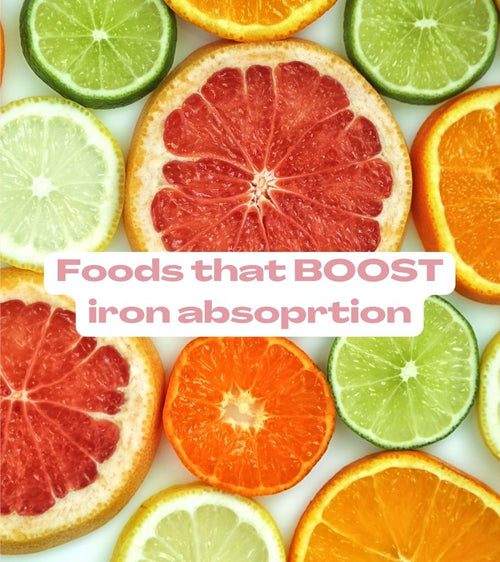
Did you know there is a way to BOOST the iron absorption for your little one? Check out our resource here on simple foods to add to solids to boost iron absorption!
Consultations
Choose one of our professional services that best suits your needs > Book Now about Consultations
🔒 This is Starting Solids Library content
Unlock every recipe, resource, review & ebook — plus the Crash Course, live monthly workshops, and our members forum.
$25/month unlocks $125+ in value
Unlock Premium AccessAlready a member? Log in