What the Australian data actually shows
This is the part worth sitting with. Babies and children under five have the highest rate of allergic reactions and by far the most hospital admissions for food allergy. Yet when you look at the fatality data, they are almost entirely absent from it.
In Australia's national fatality studies, food-related anaphylaxis deaths have clustered in teenagers and young adults. The median age of death from food anaphylaxis is around 28. In the documented coronial records kept by Allergy & Anaphylaxis Australia, the youngest child case is 9 years old. Across the Australian data available to us, there are no recorded deaths from food anaphylaxis in babies or children under five.
So the age group parents are bracing for in the car park is the age group that almost never dies from this. The serious risk is real, but it belongs to older kids and adults, not a six-month-old on the kitchen floor.
One honest note: "no recorded deaths" is not a mathematical "impossible." But this data has been actively examined, by coroners and by researchers, using national mortality and coronial records, and infants simply aren't showing up in it. That's a reassuring, well-examined position, not a hopeful guess.
The guidelines say to do this at home
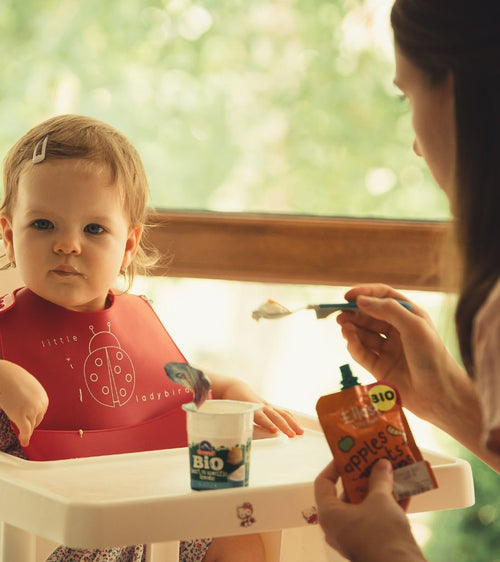
Current ASCIA infant feeding guidance is to introduce common allergens at home, in age-appropriate forms, soon after your baby starts solids (usually from around six months, and not before four months), and when your baby is well. The guidance does not tell you to be near a hospital. That absence is telling.
It's not a one-off, so the car park can't cover it anyway
Here's the part that quietly undoes the whole idea. Introducing an allergen once is not the finish line. To build and keep tolerance, allergens need to be offered regularly, about once a week, every week, for months, across a whole list of foods like egg, peanut, dairy, wheat, soy, sesame, tree nuts, fish and shellfish.
You cannot do that in a car park. The vast majority of your baby's allergen exposures are going to happen at home, at the kitchen table, over many months. One supervised trip covers a tiny fraction of that. Your baby is eating at home the other fifty-one weeks of the year regardless.
A couple of things worth understanding
Two ideas get repeated a lot, and it's worth getting them right.
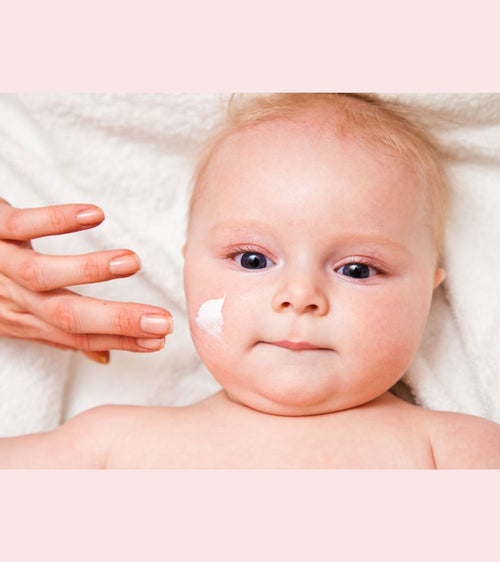
A reaction needs the body to have "met" the allergen before. That part is true, but that first meeting is often through the skin, not the spoon, especially in babies with eczema. So a first food introduction can still cause a reaction if a baby was already sensitised through their skin. This is exactly why we encourage getting allergens in early and looking after your baby's skin barrier.
The other one to drop: the idea that reactions always get worse each time, so the first is the smallest. That isn't supported. Reaction severity is unpredictable. A mild reaction can be followed by a more serious one, and a first reaction can be significant. This is why knowing what a reaction looks like and having a plan matters more than the location you're standing in.
Where extra caution genuinely applies
Some babies do warrant a more careful approach. If your baby has moderate to severe eczema, or an already-diagnosed food allergy, that's a real conversation. But it's one to have with your GP, paediatrician or allergist, who can guide you with a proper plan. That's a medical decision, not a car park.
What actually helps
- Start allergens early, from around six months, once your baby is showing signs of readiness for solids.
- Offer one new allergen at a time so that if there is a reaction, you know which food caused it.
- Keep offering the allergens your baby tolerates, roughly once a week, to help maintain tolerance.
- Give allergens when your baby is well, not when they're unsettled or unwell.
- Learn what a reaction looks like, mild through to severe, and know your plan if one happens.
The bottom line
Early, regular, and at home. That's what the evidence backs. The hospital car park feels like doing more, but it mostly adds stress, and it can't cover the months of regular exposures that actually build tolerance. Give allergens the calm, consistent, at-home approach they call for, and know the signs so you feel confident either way.
This article is general information and is not a substitute for personalised medical advice. If your baby has severe eczema, an existing food allergy, or you have any concerns about introducing allergens, please speak with your GP, paediatrician or an allergist.
References
- ASCIA. Food Allergy — Fast Facts. allergy.org.au
- ASCIA. Infant Feeding for Food Allergy Prevention (updated January 2026). allergy.org.au
- Murdoch Children's Research Institute. Food Allergy (HealthNuts). mcri.edu.au
- National Allergy Centre of Excellence. Australia's food allergy crisis, 10% of infants (2024). nace.org.au
- Murdoch Children's Research Institute. Decrease in peanut allergy among infants after guideline changes (EarlyNuts). mcri.edu.au
- Liew/Mullins et al. Anaphylaxis fatalities and admissions in Australia. J Allergy Clin Immunol.
- Mullins et al. Increases in anaphylaxis fatalities in Australia from 1997 to 2013. Clin Exp Allergy.
- Allergy & Anaphylaxis Australia. Coronial Inquiries. allergyfacts.org.au
- SchoolNuts study. Prevalence of clinic-defined food allergy in early adolescence. J Allergy Clin Immunol.