Best Yogurt Pouches for Babies: What to Look For (and Which Ones to Choose)
Confused about which yogurt pouches are actually a good choice for your baby? Here’s exactly what to look for—and the ones that meet the mark.

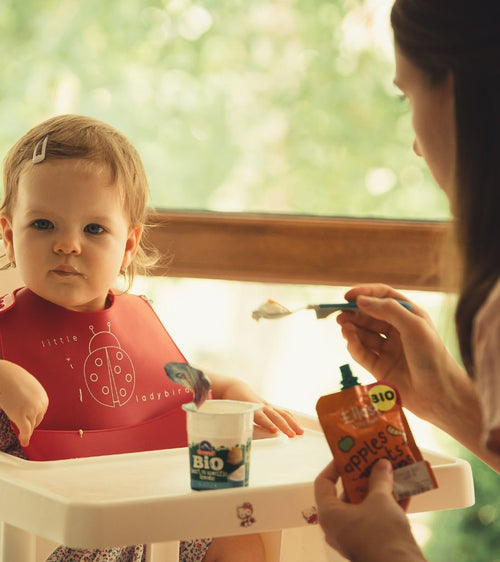
Choosing a yogurt pouch for your baby can feel surprisingly confusing. There are so many options on the shelf, and while they’re marketed as “healthy,” many don’t quite meet the mark nutritionally.
If you’re looking for general guidance on choosing yogurt, we cover that in more detail in our full yogurt guide. But here, we’re taking a closer look at yogurt pouches specifically—what to look for, what to avoid, and which ones are worth considering.
It’s also worth saying—there can be a lot of judgement around using food pouches. But we get it. Sometimes you just need something quick, easy, and convenient, and pouches can absolutely have a place.
We recommend saving them for those moments, rather than using them as an everyday option. Where possible, try serving yogurt from a bowl with a spoon. This helps your little one build important feeding skills.
What to look for in a yogurt pouch
When choosing a yogurt pouch, here’s what we recommend prioritising:
• Full fat yogurt
Aim for more than 3.5g fat per 100g. Avoid anything under 3g per 100g, as this is considered low fat.
• No added sugar
This includes fruit juice or fruit concentrate. These are often added to sweeten yogurt and count as “free sugars.”
• Good source of calcium
Look for at least 120–125mg per 100g.
• Live cultures
These support gut health, but can be lost during processing—so check the label.
• Adequate protein
More than 3g per 100g is ideal.
• Avoid “high protein” yogurts
Many contain more than 10g per 100g (or 15g per pouch), which can exceed a baby’s daily protein needs. Excess protein intake in infancy isn’t recommended and may place unnecessary strain on the kidneys.
Best yogurt pouches (that meet the criteria)
Unfortunately, not many options tick all the boxes—but there are a few solid choices available in most supermarkets.
This list isn’t exhaustive, and new products are always appearing, so it’s always worth checking the label when you see something new.
Tamar Valley Dairy Kids – No Added Sugar

• Full fat
• No added sugar or fruit concentrate
• Contains live cultures
• Protein: 3.6g per 100g
• Calcium: 143mg per 100g
A well-balanced option that ticks all the key boxes.
Jalna – Pouch of Purity Organic

• Full fat
• No added sugar or fruit concentrate
• Contains live cultures
• Protein: 4.1g per 100g
• Calcium: 162mg per 100g
A great option with strong nutrition across the board.
Petit Miam – No Added Sugar

• Lower fat (2.3g per 100g) but still reasonable
• No added sugar
• Contains live cultures
• Protein: 5g per 100g
• Calcium: 162mg per 100g
Just be mindful to choose the “no added sugar” range specifically.
Aldi Brooklea – No Added Sugar

• Full fat
• No added sugar
• Contains live cultures
• Calcium: 120–143mg per 100g
• Budget-friendly option
A great affordable choice that still meets most criteria.
Farmers Union – Greek Style Yogurt Plain

• Full fat
• No added sugar or fruit concentrate
• Contains live cultures
• Protein: 5.5g per 100g
• Calcium: 196mg per 100g
Be mindful of flavoured versions, which often contain added fruit concentrates.
Chobani – No Added Sugar

• Full fat
• No added sugar
• Contains live cultures
• Lower calcium (97mg per 100g)
While calcium is slightly lower, most children meet their calcium needs easily, so this can still be included as an option.
🔒 This is Starting Solids Library content
Unlock every recipe, resource, review & ebook — plus the Crash Course, live monthly workshops, and our members forum.
$25/month unlocks $125+ in value
Unlock Premium AccessAlready a member? Log in