Is It Okay To Give Protein Powder To Babies or Toddlers?
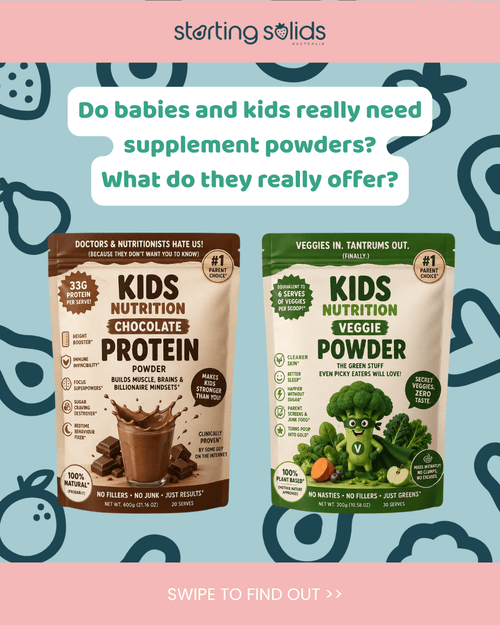
Protein powders and shakes for kids are everywhere right now, pushed hard by influencers and built on parental worry. Australian paediatric dietitians unpack whether toddlers actually need them - and what the evidence says about high protein intake in early childhood.

We're seeing a big increase in advertising - especially from influencers - around protein powders, shakes and supplements for children. A lot of this marketing plays directly on parental worry: the fear that your child isn't getting "enough", or isn't getting the "best possible start".
The short answer is that despite the marketing claims and the health-halo packaging, for most children these products simply aren't needed - and they can crowd out the whole foods your child actually should be eating.
But don't kids need protein to grow?
Absolutely. Protein is essential for growth and development.
But protein deficiency is uncommon in Australian children. The recommended dietary intake for a 1-3 year old is around 14g a day(1) - and national survey data shows Australian children typically meet and exceed their protein needs through everyday foods.(2) Even the safe beige foods are surprisingly good sources of protein.
That's why we generally recommend avoiding products with added or concentrated protein for babies and toddlers. Protein-enriched yoghurts (the high-protein adult ones) may be fine for adults, but a single tub can exceed a young child's entire daily protein requirement.
Why more protein isn't automatically better
Here's the part the marketing skips.
Higher protein intake in infancy has been linked with faster early weight gain and an increased risk of overweight later in childhood. The strongest evidence comes from the European Childhood Obesity Trial - a randomised controlled trial where infants were fed formula with either higher or lower protein content. By age two, the higher-protein group had significantly higher weight-for-length. By age six, they had a higher BMI and were more likely to be obese.(3)
This is the "early protein hypothesis": excess protein in early life drives insulin and IGF-1, which promotes accelerated growth and fat deposition.(3,4)
So piling extra protein into a toddler isn't a neutral act. It's an intervention - and not one with a demonstrated benefit for a healthy child.

When might protein actually be a concern?
If a child eats very few protein-containing foods - particularly if they avoid both animal and plant protein sources - then intake may genuinely need assessing.
Even then, off-the-shelf protein powders and shakes are not our first choice. Individual assessment matters. A one-on-one consult with a paediatric dietitian will identify what's actually missing, rather than throwing a generic powder at it.
"But my child only eats beige foods..."
More common than you think - and usually less nutritionally alarming than it feels.
Many beige foods still contribute meaningful nutrition, including protein:
- Milk → protein, calcium, vitamin B12
- Cheese → protein, energy, fats, calcium, vitamin A, zinc
- Cereals → energy, fibre, B vitamins (often iron-fortified)
- Yoghurt → protein, calcium, B vitamins
- Fish fingers and chicken nuggets → protein, iron, energy, fats
We're not saying a beige diet is ideal - variety matters enormously. But we also can't force children to eat. Our job is to offer, model and support variety over time, not to panic about a food phase. (More on this in How To Handle "Fussy" Eaters.)

What about kids who won't eat vegetables?
Plenty of products market themselves as "complete nutrition" to fill exactly this gap.
While fruit and vegetables aren't nutritionally identical, fruit provides many of the same vitamins found in vegetables - vitamin C, folate, potassium, fibre.(5) If a child is eating a decent variety of fruit, it's unlikely they're missing major vitamins purely because of vegetable refusal.
And if there is a genuine deficiency, these products are unlikely to be the right fix anyway. Identifying and correcting a deficiency needs individual assessment - sometimes blood tests - not a blanket scoop of powder.

Let's talk safety
Protein powders are commonly discouraged in pregnancy - not because protein is harmful, but because of the potential for contaminants and inconsistent ingredient quality. Independent testing of supplements has repeatedly found heavy metal contamination and ingredients that don't match the label.(6)
Supplements in Australia are regulated as complementary medicines, not as food for infants - and infant-specific safety testing is generally not required.
The same caution applies to children. If a product contains added protein powders, you want to know exactly what's in it. Artificial sweeteners - often added to make products "low sugar" - can also cause tummy upsets in young children.
And cost matters too
Many of these products work out to well over $200 per kilogram.
By comparison:
- Greek yoghurt or full-cream milk costs a few dollars per kilogram
- And delivers comparable protein, energy and nutrients - plus calcium and B12
The bottom line
What you feed your child is always your decision - but it should be an informed one.
An enormous amount of marketing money is spent convincing parents they need expensive products when, in most cases, they really don't. And in the case of concentrated protein, the best available evidence suggests the extra isn't just unnecessary - it may not be doing them any favours.(3)
If you're worried about your child's nutrition, individual support makes all the difference. A personalised plan addresses the real issue, rather than sticking an expensive band-aid over it in the form of a shake.

Protein powder for kids: FAQs
Can babies have protein powder?
No - there is no need, and no infant safety data behind these products. Babies get plenty of protein from breastmilk or formula plus solids.
How much protein does a toddler actually need?
Around 14g a day for a 1-3 year old.(1) A tub of yoghurt, an egg and some cheese covers it.
Is too much protein bad for a toddler?
Excess protein in early life has been linked in randomised trial data to higher BMI and greater obesity risk in later childhood.(3) More is not better.
What about high-protein yoghurts?
They're formulated for adults. A single tub can exceed a young child's full daily protein requirement. Regular full-fat yoghurt is a better choice.
My child barely eats meat - should I use a protein powder?
Not as a first step. Dairy, eggs, legumes, tofu, nut butters and even beige favourites contribute real protein. If you're genuinely worried, get an individual assessment.
References
- National Health and Medical Research Council (NHMRC). Nutrient Reference Values for Australia and New Zealand - Protein. eatforhealth.gov.au
- Australian Bureau of Statistics. Australian Health Survey: Usual Nutrient Intakes. abs.gov.au
- Koletzko B, von Kries R, Closa R, et al. Lower protein in infant formula is associated with lower weight up to age 2 y: a randomized clinical trial (European Childhood Obesity Trial). Am J Clin Nutr. 2009;89(6):1836-45. PubMed
- Weber M, Grote V, Closa-Monasterolo R, et al. Lower protein content in infant formula reduces BMI and obesity risk at school age: follow-up of a randomized trial. Am J Clin Nutr. 2014;99(5):1041-51. PubMed
- National Health and Medical Research Council. Australian Dietary Guidelines - vegetables and fruit. eatforhealth.gov.au
- Therapeutic Goods Administration (TGA). Complementary medicines regulation and supplement quality in Australia. tga.gov.au
🔒 This is Starting Solids Library content
Unlock every recipe, resource, review & ebook — plus the Crash Course, live monthly workshops, and our members forum.
$25/month unlocks $125+ in value
Unlock Premium AccessAlready a member? Log in