Baby Bone Broth - Superfood or Fancy Stock?

The linen-clad Instagram fantasy
The second you start scrolling Instagram you'll find a sea of beautiful photos of families wearing flowing beige linen (a bold choice - anything close to white wouldn't stay clean for five minutes in our house). In amongst the perfectly curated photos, you'll often see babies being spooned home-made, wobbly, gelatinous bone broth.
It's touted as an amazing superfood that will heal your baby's gut, fix their digestion, reduce inflammation and strengthen their bones.
Wow. Brb, running to the butcher for a bag of bones.
Except - hang on. Let's actually look at what's in the pot.
If it sounds too good to be true, it usually is.
What bone broth actually contains
Here's the bit the wellness accounts skip: someone has actually measured this.
When researchers analysed animal bone broths and compared them against dietary reference intakes, the contribution of calcium, magnesium, iron, copper and zinc was generally less than 5% of daily requirements.(1) Protein levels are low too. Nutritionally speaking, bone broth is mostly water with some flavour and a bit of collagen.
And yes, it does contain collagen - which does contain useful amino acids. But your body doesn't take collagen you eat and post it directly to your baby's joints. It breaks it down like any other protein and uses the building blocks wherever they're needed. You get the exact same thing from the skin on your salmon, or from slow-cooked meat.
In fact, slow-cooking some lamb shanks with vegetables gives you everything the broth would, plus iron, protein, and a long list of vitamins and minerals. It's also an actual meal the whole family can eat, for a lot less faffing about.
The bigger problem: it can displace real food
This is the part that genuinely matters for babies.
For babies under 12 months, breastmilk or formula should be the main drink.(2) Little tummies fill quickly. If broth is being offered as a drink, it's taking up space that should be going to the milk and iron-rich foods your baby actually needs in that first year - the ones doing the heavy lifting for growth and brain development.
A splash used in cooking? Completely fine. A cup of broth as a drink, in place of milk or a meal? That's where it stops being harmless.
The lead question nobody mentions
Here's one you won't see on the beige-linen posts.
Lead accumulates in bone. When you simmer bones for hours, some of that lead can leach into the broth. In one controlled analysis, broth made from chicken bones contained markedly higher lead concentrations than the tap water it was made with - up to around a tenfold increase, with the highest levels in broth made from skin and cartilage.(3)
Is this a reason to panic? No. But it is a reason to be unimpressed when someone tells you a daily cup of bone broth is the healthiest thing you can give your baby. There's no safe benefit here that outweighs it, because the nutritional benefit was never really there to begin with.
Verdict: overhyped. If bone broth isn't already part of your family's cooking, you're not missing out on anything.
So can my baby have bone broth at all?
Yes - this isn't a ban.
If bone broth is already something you make and love, keep using it as a cooking liquid. Use it to cook rice, quinoa or pasta, to loosen a puree, or as the base of a casserole. Used that way, it adds flavour and does no harm.
What we'd skip:
- Offering it as a drink to babies under 1, in place of milk.
- Simmering bones for hours because someone online told you it'll "heal bub's gut". It won't.
- Paying superfood prices for what is, essentially, stock.
Bone broth is really just a rebranded version of the from-scratch stock our grandparents made with leftover bones. They were ahead of their time on food waste and stretching the budget - they just didn't charge $47 a tin for it.
If you still want to buy it
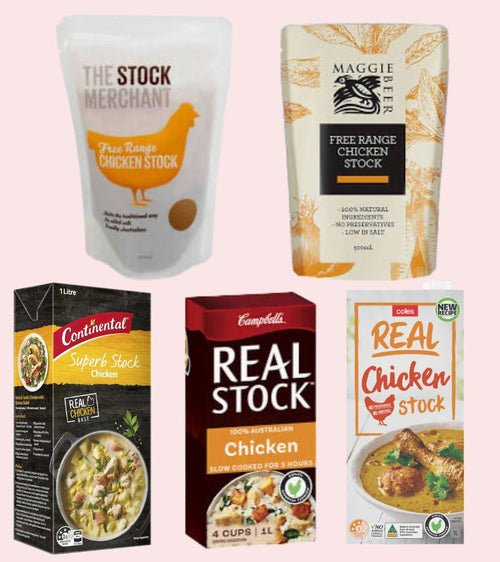
If you'd rather not DIY, a few commercial options aren't too high in sodium. We're looking for low sodium (under 120mg per 100ml), around 2.5-3g protein per 100ml, and no added sugar.
- Undivided Food Co - Good Bones to Go - about $9 per 250ml. No added sugar, 97mg sodium per 100ml.
- Maggie Beer Natural Bone Broth (Coles and Woolworths) - about $8.50 per 500ml. No added sugar, 99mg sodium per 100ml.
- Coles Beef Bone Broth - about $6.30 per 500ml. No added sugar, 159mg sodium per 100ml (moderate rather than low, but not bad).
- Campbell's Real Bone Broth (Coles and Woolworths) - about $7.00 per 500ml. Low sodium at 111mg per 100ml, but does contain some sugar.
- Nutra Organics chicken bone broth powder - a whopping $47 per 125g tin. Low sodium (66mg per 100ml) and no added sugar. We'd avoid the concentrates - they're very high in sodium.
For more on why we watch sodium so closely in little ones, read Salt and Babies - What Do You Need To Know?
Bone broth for babies: FAQs
Can babies drink bone broth?
We wouldn't offer it as a drink under 12 months. Breastmilk or formula should be the main drink in the first year, and broth can fill a small tummy without providing much nutrition.(1,2)
Does bone broth heal a baby's gut?
No. There's no good evidence bone broth heals the gut, cures reflux or "reduces inflammation" in babies. It's a flavourful stock, not a medicine.
Is bone broth a good source of calcium or protein?
Not really. Analysis of bone broths found they contributed less than about 5% of daily requirements for calcium, magnesium, iron, copper and zinc.(1)
Is the lead thing a real concern?
Lead can leach from bones into broth, with measured levels several times higher than the water used to make it.(3) It's not a reason to panic over the occasional casserole - but it's another reason not to give broth daily as a health tonic.
What should I use instead?
Slow-cooked meat, casseroles and stews. Same comfort, same flavour, plus the iron, zinc and protein your baby actually needs.
References
- Hsu DJ, Lee CW, Tsai WC, Chien YC. Essential and toxic metals in animal bone broths. Food & Nutrition Research. 2017;61(1):1347478. (Nutrient contribution generally <5% of dietary reference intakes.) PubMed Central
- National Health and Medical Research Council (NHMRC) - Infant Feeding Guidelines. Eat For Health, Australian Government. eatforhealth.gov.au
- Monro JA, Leon RJ, Puri BK. The risk of lead contamination in bone broth diets. Medical Hypotheses. 2013;80(4):389-390. PubMed
🔒 This is Starting Solids Library content
Unlock every recipe, resource, review & ebook — plus the Crash Course, live monthly workshops, and our members forum.
$25/month unlocks $125+ in value
Unlock Premium AccessAlready a member? Log in