Is Your Child A Good Eater?

Everyone asks it, health professionals, family and friends, but what does it even mean?
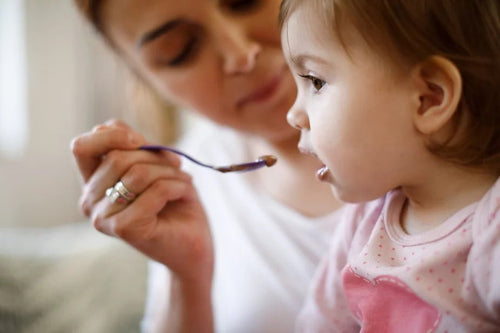
Children's eating styles, behaviours and fussiness will fluctuate based on their developmental stages, so the answer to this question will obviously vary based on that alone. It's our goal to support you in developing your child's eating habits so that they enjoy variety, participate in family meals, are adaptable (within reason) and to set them up for future healthy eating patterns. Both the foods that you serve, as well as the where, when and how of serving food are important.
So what are some strategies that you can use to support your little eater:
1. Same food, same time (as often as possible) - aka role modelling. Children learn so many things by observation - they look to us for guidance and that also involves foods. You can see this when your child starts to track what you're eating when they're an infant, and it evolves. Whilst it's not always possible, trying to eat similar if not the same foods as your child gives them a point of reference for what to and what not to eat.
2. Variety - whilst we are all creatures of habit and when we know something is a sure winner with our child it can be easy to choose that frequently. Though choosing different cooking methods, providing different flavour and texture combinations, as well as food type is an important element of exposure.
3. Mess - we've said this a bit lately, allow mess. Children need to use all their senses to experience food, and intervening by cleaning up or perhaps progressing slowly to self-feeding (if following traditional weaning) can discourage children from engaging in meals.
4. Don't force feed or encourage eating beyond fullness - most children are born with an innate understanding of their own appetite. Our job is to protect this and to encourage children to recognise when to say they're done - learning these cues from the beginning are essential.
5. Consider how much milk they're getting - if bottle feeding, and transitioning to cow's milk (in a bottle or cup) it's important to consider how often and how much your LO is having, is it appropriate for their age? Having too much milk can displace other foods, and doesn't give your child space to feel hungry for other foods.
6. Routine - routine, routine, routine - creating a solid routine of milk feeds, meal and snack times are a tip we often encourage. Establishing a schedule around solids that provides an eating opportunity every 2-3 hours can give your child confidence that there will be food available soon. That way they can have space to develop their appetite, and then eat just enough to satisfy their hunger. It also helps you avoid the snack trap, provides you with predictability in your day, and the opportunity and confidence to defer to the next eating occasion.
7. Patience - hard, we know! Learning to eat, just like learning to speak, write and walk requires time. It will take time, there'll be times when it feels like it's harder than normal.
8. Family time - similar to role modelling, engage the whole family. If possible, eat as a family and engage in silly conversations, talk about your day, tell stories etc. create a fun and engaging environment that your child wants to be a part of.
9. Don't forget about the small wins. Engaging with food and eating doesn't necessarily start with eating, some kids will launch in and have a taste of most foods. Others won't. However, there are a number of steps that come before eating that are all working towards the same outcome. These are called pre-feeding steps. These look like touching, smelling, liking, squishing, nibbling, even looking at a particular food and are sometimes missed as necessary stages in feeding development. (Nb. If no food is being eaten and your child stops here, then reaching out to a health professional may be necessary).
10. Ask for help - If your child catches a cold or a stomach bug you might head to the doctors, if your car breaks down you might head to a mechanic, just like all these professions that are specialists in their area, we've decided to specialize in food and nutrition. We can help. Help might look like introducing a few small changes, or it might require a more intensive engagement, or anything in between. If you're having challenges we'd love to support you, and there is never any judgement, just support - reach out via the contact us page.
🔒 This is Starting Solids Library content
Unlock every recipe, resource, review & ebook — plus the Crash Course, live monthly workshops, and our members forum.
$25/month unlocks $125+ in value
Unlock Premium AccessAlready a member? Log in