How To Serve Tuna For Babies
Tinned tuna is one of the cheapest, quickest ways to get fish into your baby's week. Here's which tins to buy, what FSANZ says about mercury, and how to serve tuna safely from 6 months.

Tinned tuna is a pantry hero. It's cheap, it's already cooked, and you can have it mashed into avocado in about two minutes.
It's also an easy way to introduce fish and keep it in your baby's diet each week. Here's what to buy and how to serve it.
Quick answer
Yes. Babies can eat tuna from around 6 months, once they're ready for solids. Tinned tuna in springwater is the easiest option. Mix it with something moist so it isn't dry, and skip raw tuna for now.
When can babies eat tuna?
Tuna can be offered from around 6 months (not before 4 months). ASCIA lists fish with the iron-rich foods to offer at the start of solids, and fish is one of the common allergy foods to introduce in the first year.
Tinned tuna and fresh tuna cooked all the way through are both fine. Raw tuna in sushi, sashimi and poke bowls isn't. FSANZ lists raw fish dishes as higher-risk foods for people with weaker or still-developing immune systems.
Is tuna a common allergen?
Yes. Fish, including tuna, is one of the common allergy causing foods. Introduce one new common allergy food at a meal and start with a small amount, like a teaspoon mixed into a food your baby already eats.
Once it's tolerated, keep it in the diet at least once a week. That's ASCIA's updated advice from January 2026. If you see hives, swelling of the lips, face or eyes, or vomiting, stop and get medical advice. Call 000 straight away for any signs of anaphylaxis, like difficult or noisy breathing or swelling of the tongue.
Is tuna a choking hazard?
Tinned tuna is soft and already flaked, but it can be dry and crumbly on its own, which can make babies gag. Fresh tuna steaks can be firm and chewy if overcooked.
- Drain tinned tuna and mix it with avocado, yoghurt, mashed potato or pumpkin so it holds together.
- Cook fresh tuna through, then flake it finely or mash it rather than serving firm chunks.
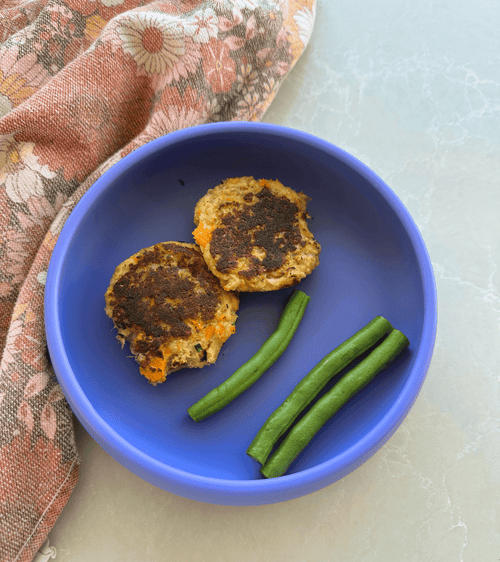
- Shape tuna into soft patties or fritters for finger food.
- Keep your baby sitting upright and stay with them while they eat.
How to serve tuna by age
6–9 months
Mash drained tinned tuna into avocado, sweet potato or potato for a spoon-fed mash or a pre-loaded spoon. For finger food, offer soft tuna fritters or patties cut into finger-sized strips. Softness test: they should squash easily between your thumb and finger.
9–12 months
Offer small soft clumps of tuna mash or pieces of tuna cake for your baby to pick up with their pincer grasp. Tuna mixed into risoni or small pasta shapes is easy to pick up too.
12 months+
Your toddler can share tuna pasta bakes, tuna rice balls, sandwiches and wraps. Choose low-salt options and go easy on mayo and cheese on top.
Nutrition benefits of tuna for babies
Tuna gives babies protein, haem iron, vitamin B12 and selenium, plus some omega-3 fats. In the Australian Food Composition Database, drained tuna canned in water has about 26g of protein, 1.2mg of iron and 73µg of selenium per 100g.
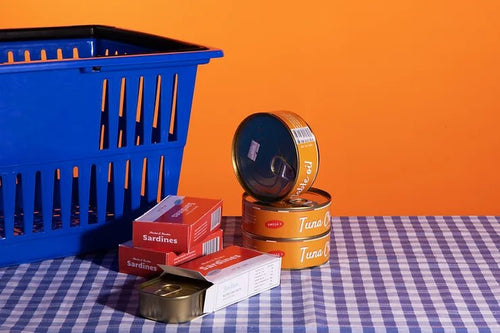
The tin you pick matters for salt. Tuna canned in water has about 250mg of sodium per 100g, brine about 400mg, and flavoured tuna in oil around 430mg. Choose tuna in springwater, look for 'no added salt' or 'reduced salt' on the label, and skip the flavoured tins.
26g
protein / 100g tuna in water
750mg
long-chain omega-3 / 100g tuna in water
73µg
selenium / 100g tuna in water
Easy ways to serve tuna
- Tuna mashed with peas and avocado (our 5-Minute Tuna with Smashed Peas and Avocado is ready in minutes)
- Our Tuna & Veggie Cakes, a freezer-friendly finger food
- Tuna and Broccoli Quinoa Cups or Tuna and Corn Fritter Cakes from our recipe library
- Tuna stirred through soft pasta with a little ricotta and grated zucchini
- Tuna and sweet potato mash
- Tuna + Nori Rolls for older toddlers
Dietitian tip
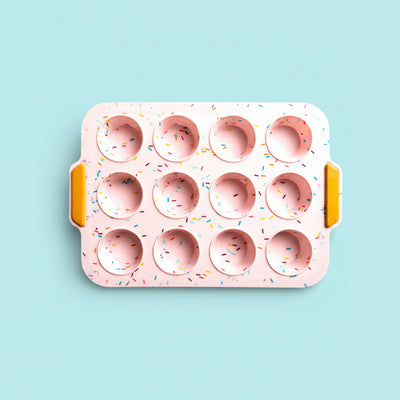
Make a tray of tuna cakes in our Dainty Dozen tray and freeze them. They defrost fast, travel well and are an easy way to keep fish in the diet every week. Every baby is different, so if they're not keen on tuna, try it mixed with a food they already love.
Frequently asked questions
Is tinned tuna safe for babies because of mercury?
Yes. FSANZ says canned tuna is safe for everyone to eat as part of their fish intake, and it generally has lower mercury than tuna fillets because smaller, younger tuna are used. For children up to 6, FSANZ uses a 75g portion size. Their extra limits only apply to shark (flake), billfish, orange roughy and catfish.
Is tuna in oil or springwater better?
Springwater. It's usually lower in salt than brine or flavoured tins. If you only have tuna in oil, drain it well.
Can babies have fresh tuna steaks?
Yes, if they're cooked all the way through and flaked finely. Fresh tuna is firmer than tinned, so it's easier for older babies. Rotate tuna with other fish through the week.
Can my baby eat sushi with tuna?
Not raw tuna. Sushi rolls made with tinned tuna and avocado are fine for toddlers. Cut rolls into small pieces, as nori can be chewy.
How often can my baby have tuna?
Tinned tuna can be part of your regular fish meals. We'd still rotate it with salmon, sardines and white fish for variety.
You may also like
References
- ASCIA. How to Introduce Solid Foods to Babies for Allergy Prevention (updated January 2026). https://www.allergy.org.au/patients/allergy-prevention/ascia-how-to-introduce-solid-foods-to-babies
- Food Standards Australia New Zealand. Mercury in fish. https://www.foodstandards.gov.au/consumer/chemicals/mercury
- Food Standards Australia New Zealand. Mercury in Fish brochure (December 2020). https://www.foodstandards.gov.au/sites/default/files/consumer/chemicals/mercury/Documents/Mercury%20in%20Fish%20brochure%20Dec%202020%20Final.pdf
- Food Standards Australia New Zealand. Food safety for vulnerable people. https://www.foodstandards.gov.au/consumer/prevention-of-foodborne-illness/Food-safety-for-vulnerable-populations
- Sydney Children's Hospitals Network (NSW Health). Introducing solid foods. https://www.schn.health.nsw.gov.au/kids-health-hub/kids-nutrition/infant-and-baby-nutrition/introducing-solid-foods
- Food Standards Australia New Zealand. Australian Food Composition Database, Release 3 (nutrient profiles). https://www.foodstandards.gov.au/science-data/food-nutrient-databases/afcd/data-files